
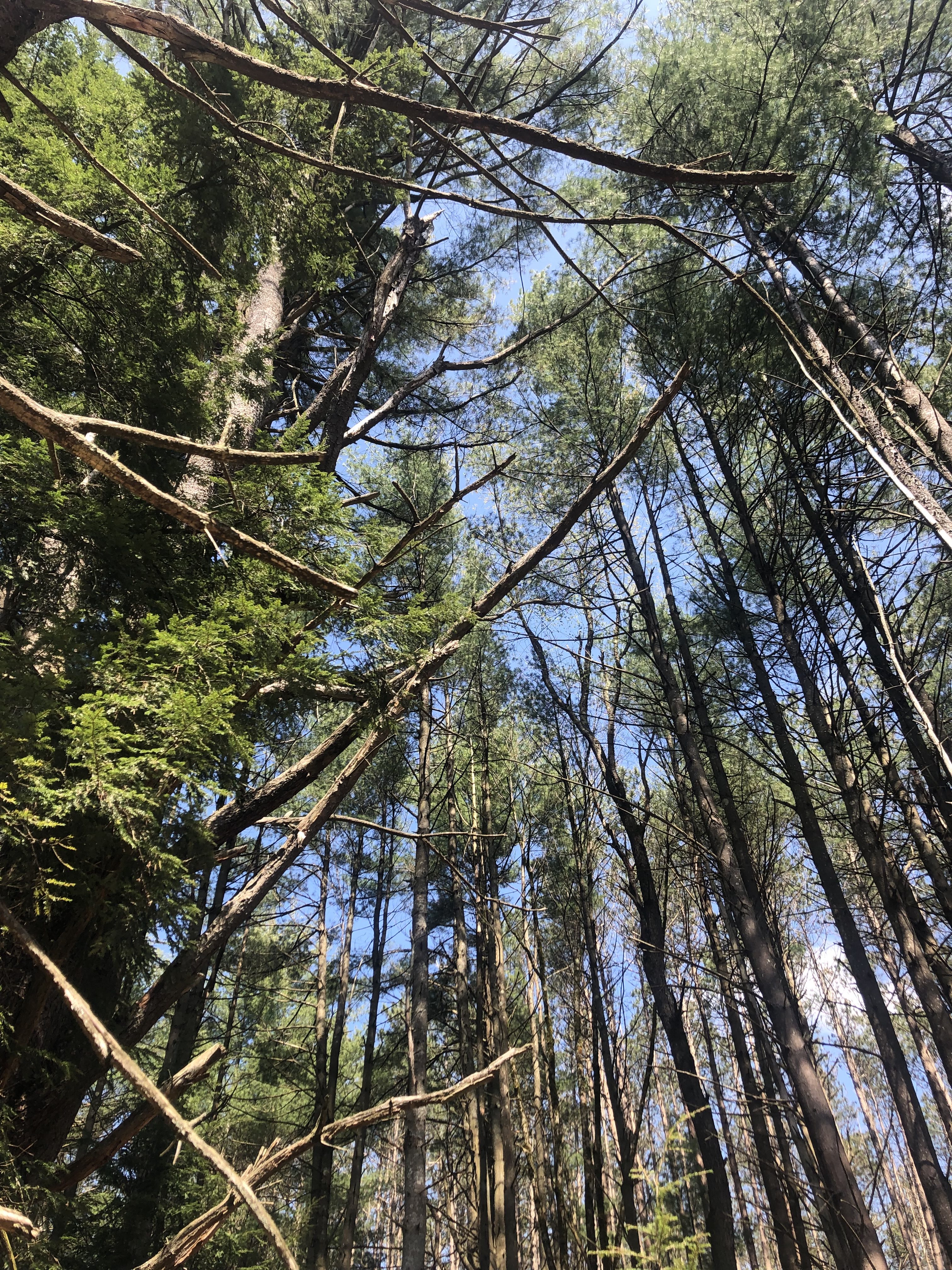
Having two German Shepherds who require exercising, I spend a lot of time walking through the woods that I am fortunate to live in. For the past three years, we have been out there every day and there is always something different about the woods. It’s hard to explain, but the combination of the weather, time of day, and season, the forest paints a unique picture every day. That said, it can get a little monotonous if I don’t take the time to immerse myself into the activity, which gets me to think about rejuvenating and gathering strength from the trees, the practice called forest bathing.
Forest bathing, known as “shinrin-yoku” in Japanese, is a therapeutic practice that involves immersing in the natural environment of a forest. Originating in Japan in the 1980s, it has since gained popularity worldwide as a way to promote physical and mental well-being.
The concept is simple: spend time in a forest, engage your senses, and connect with nature. Unlike hiking or other outdoor activities that focus on physical exercise, forest bathing is about slowing down and mindfully experiencing the environment. You are encouraged to walk slowly, breathe deeply, and take in the sights, sounds, and smells of the forest.
A recent article by Ian Taylor for the BBCScience Magazine wrote, “Forest bathing offers a simple yet profound way to reconnect with nature and promote holistic wellness. By immersing yourself in the natural world, you can reduce stress, improve mood, boost immunity, and enhance overall well-being. Whether it’s a dense forest or a city park, the practice of forest bathing invites you to slow down, breathe deeply, and experience the healing power of nature.”

Benefits of Forest Bathing
Taylor goes on to write, “In Japan and South Korea, where most of the research on forest bathing has been done to date, the practice is taken quite seriously. It’s prescribed by doctors. “You can go to your GP if you’ve got stress or high blood pressure, and you can get a prescription to go and do forest bathing at a clinic in the woods,” says Dr Kirsten McEwan, associate professor of health and well-being at the University of Derby.”
I absolutely feel a difference in myself after a mindful walk. I admit sometimes I just brainstorm when we go out. But when I take the time to breathe and smell the forest air, and let the trees refill my senses, it’s a noticeable lift in my mood and wellbeing.
More on the Benefits
1. Stress Reduction: Research has shown that forest bathing can significantly reduce stress levels. The calming effect of nature helps lower cortisol, the body’s primary stress hormone.
2. Improved Mood: Spending time in a forest has been linked to improved mood and decreased anxiety and depression. The natural surroundings help promote a sense of peace and relaxation.
3. Enhanced Immune Function: Studies suggest that exposure to phytoncides, the natural oils released by trees, can boost the immune system. These compounds have antibacterial and antifungal properties that help protect the trees and may benefit human health.
4. Better Sleep: The relaxation achieved through forest bathing can lead to better sleep quality. The reduction in stress and anxiety allows for more restful and restorative sleep.
5. Increased Creativity and Focus: Being in nature has been found to enhance cognitive function, creativity, and focus. The natural environment provides a break from the constant stimuli of modern life, allowing the brain to recharge.
More on How to Practice Forest Bathing
1. Choose a Forest: Select a forested area that is accessible and safe. It doesn’t have to be a remote location; even urban parks with dense tree cover can offer benefits.
2. Take your phone but turn if off or switch to silent: Having the worst sense of direction, I am prone to getting lost. Having compass and map apps saves me from having a panic attack. It’s important to be feel safe in order to fully engage with your natural surroundings.
3. Move Slowly: Walk slowly and aimlessly, allowing yourself to wander and explore without a specific goal, but keep your trail in mind and watch your footing. Tripping is a specialty of mine so I do get the occasional scraped knee and bloodied hand.
4. Engage Your Senses: Pay attention to the sounds of rustling leaves, the sight of sunlight filtering through the trees, the smell of pine or damp earth, and the feel of the breeze on your skin. I love finding salamanders, frogs, and other forest floor dwellers. Listening to bird calls is another favorite aspect.
5. Be Present: Practice mindfulness by staying present in the moment. Let go of worries and distractions, focusing on the here and now.
6. Sit and Observe: Take breaks to sit quietly and observe your surroundings. This stillness can deepen your connection with nature.

Grounding: Connecting with the Earth for Enhanced Well-Being
Related to forest bathing is the practice called grounding. Grounding, also known as earthing, is a therapeutic practice that involves connecting physically with the Earth to improve health and well-being. This practice is based on the idea that direct contact with the Earth’s surface can transfer energy and electrons to the body, offering various physical and mental health benefits.
For an in depth look at the practice, there is a great documentary called Grounding. The doc explores the scientific phenomenon of how we can heal our bodies by doing the simplest thing that a person can do – standing barefoot on the earth.
The Science Behind Grounding
The Earth possesses a natural electric charge, and proponents of grounding believe that direct contact with this charge can help neutralize free radicals, reduce inflammation, and balance the body’s electrical state. Grounding can be achieved through various methods, such as walking barefoot on grass, sand, or soil, lying on the ground, or using grounding devices like mats or sheets that simulate the effect of direct contact with the Earth.
The jury is still out for me on this practice, but I figure it couldn’t hurt. Walking barefoot in the forest is really liberating. Of course you need to watch your step, but the ground is quite soft and walking on moss is an amazing experience. I do kick off my shoes when I’m planting or weeding sometimes and yeah, there is that cool sensation you feel when the dirt squishes between your toes. Maybe that’s the energy. Maybe it just feels nice.
Some Benefits of Grounding
1. Reduced Inflammation: Studies have shown that grounding can reduce markers of inflammation. The transfer of electrons from the Earth may help neutralize free radicals, which are known to cause oxidative stress and inflammation in the body.
2. Improved Sleep: Grounding has been linked to better sleep quality. By normalizing cortisol levels and reducing stress, grounding can help regulate sleep patterns and promote more restful sleep.
3. Enhanced Mood and Stress Reduction: Direct contact with the Earth’s surface has been associated with decreased stress and anxiety. Grounding can help calm the nervous system, leading to improved mood and emotional stability.
4. Pain Relief: Many individuals report a reduction in chronic pain and muscle stiffness after practicing grounding. The anti-inflammatory effects of grounding may contribute to pain relief and improved mobility.
5. Boosted Immune Function: Grounding may enhance immune function by reducing inflammation and stress, both of which can weaken the immune system. Regular grounding can help the body maintain a robust defense against illness.
How to Practice Grounding
1. Walk Barefoot: One of the simplest ways to practice grounding is to walk barefoot on natural surfaces like grass, sand, or soil. Aim for at least 30 minutes a day to experience the benefits.
2. Sit or Lie on the Ground: Spending time sitting or lying directly on the ground can help you connect with the Earth’s energy. Find a comfortable spot in a park, beach, or your backyard.
3. Use Grounding Devices: Grounding mats, sheets, and patches are designed to simulate direct contact with the Earth. These devices can be used indoors, providing a convenient way to practice grounding at home or work.
4. Gardening: Digging in the soil with your bare hands can also serve as a form of grounding. Gardening not only connects you with the Earth but also provides the added benefits of physical activity and exposure to nature.
5. Swimming in Natural Bodies of Water: Swimming in lakes, rivers, or the ocean can also facilitate grounding. Water is a conductive medium, allowing you to absorb the Earth’s electrons while enjoying a refreshing swim.
This week after a very hot market day, i stopped at the public beach on the lake for a quick dip. It felt so good, I then had to get ice cream. 😉
Let me know in the comments if you have experienced benefits from either forest bathing or grounding. If you have been inspired to try either, or both, I’d love to hear your thoughts.

Lastly, a blatant plug for my all-natural bug spray that really works! I have had happy customers all summer and I would not be spending the time that I do in the woods without it. It’s available on my website (US only) though the fall. Thanks for reading! ❤️
Leave a Reply