
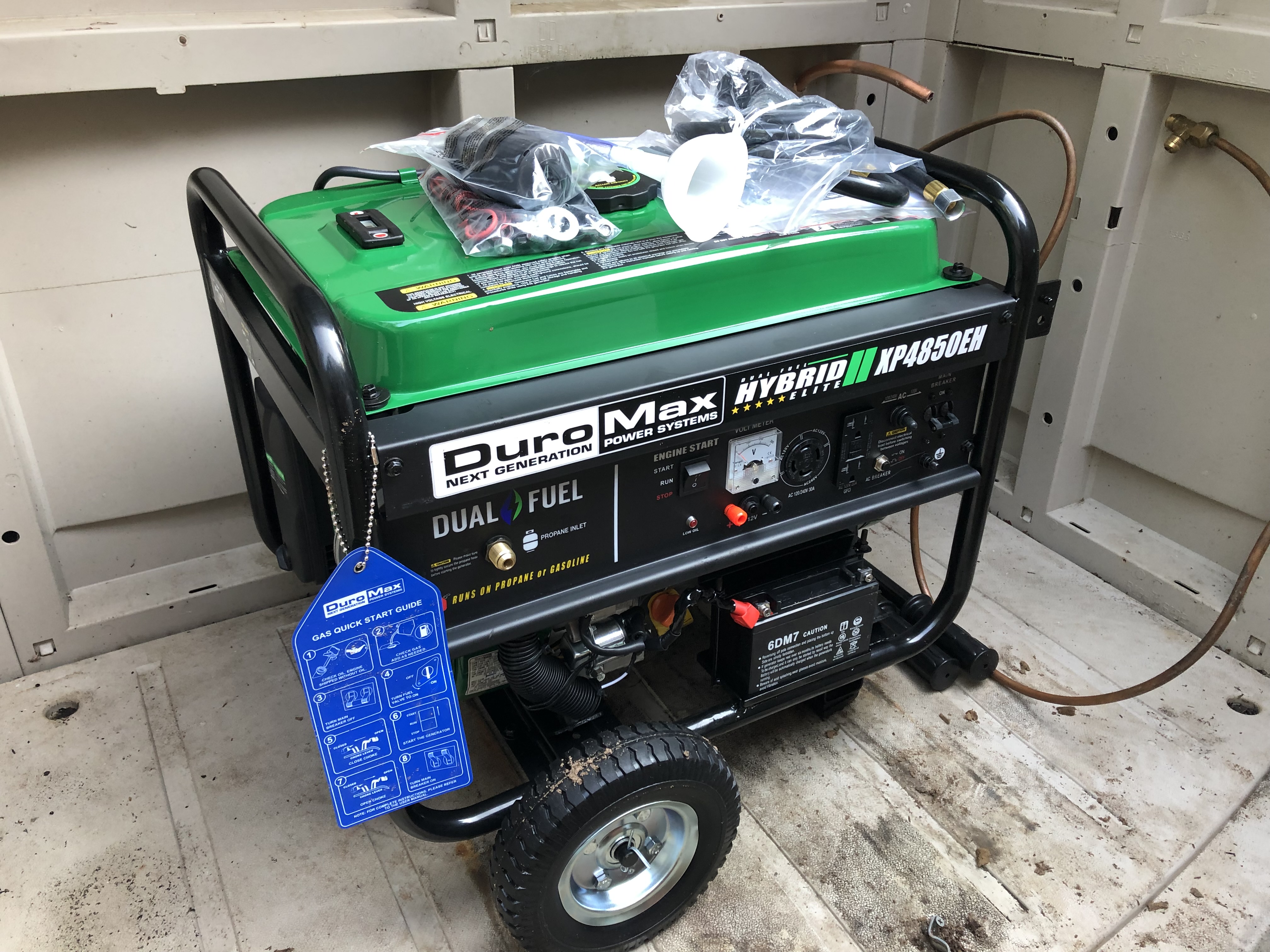
My dream is to one day have a home that no longer needs fossil fuels. Even here in upstate New York, I do believe it’s possible. For now, I use propane for heat along with my wood stove, and I run a portable gas generator when I am not on solar.
I run the generator about four hours a day in these short, dark, and cloudy months; two hours in the morning and two in the evening. I store 15 gallons of ethanol-free gasoline in gas-approved containers in my garage. By March, the sun is high enough again to provide enough solar to run my little cabin.
Until mid-November, I only used the generator after a couple of back-to-back cloudy days. I have discovered New York to be a much sunnier place than one would think. When I need power outside for power tools or whatever, I plug a heavy-duty extension cord into the AC120-volt outlet as my model also has an AC 240-volt outlet. That one is where my house plugs in. Literally.
So what about you? Ready for a new love/hate relationship?
Portable generators are easy to use and operate. And you can, but do not need to, have them hard-wired to your house. My sister has hers tied into her tiny home. It sure came in handy after Finn. the storm in January that caused high winds taking out power in her coastal village for three days. My sister doesn’t have a battery backup, which means she has power when the generator is running and no power when it is off. As I have batteries to store solar, my generator powers my batteries as well as provides instant power, which means I have power after the generator is off. If you have traveled in an RV, it’s a similar thing.
Those are two options for a semi-permanent power backup, but you can easily use a portable generator for your home during power outages. I am super impressed with the quiet generators out now. A vendor friend has one and I couldn’t believe it was running. They don’t power a house, but as a backup, they are an excellent solution to power up essentials. All you have to do is run an extension cord from your house to the generator, (THAT MUST BE KEPT OUTSIDE WHEN USING at least ten feet away from your house), plug it in, and attach a power strip. Voila, you are sitting back streaming, charging your phone, and warm while the power company scrambles to get the grid back up.
In all seriousness, this small investment could allow you to shelter in place during a disaster. That, my friend, is independence and safety. Do not be intimidated by these little friendly machines.
Despite my challenges with my generator and there have been a few (I will tell you about another time), I have grown to love my noisy, smelly, fossil fuel-guzzling generator. But as love/hate relationships go, I am looking for an alternative.
Disclaimer: I hope all the explanations aren’t sounding oversimplified, but I figure I had to learn all that once.
Thanks for reading!
AFFILIATES DISCLAIMER
This Site may contain links to affiliate websites, and we receive an affiliate commission for any purchases made by you on the affiliate website using such links.
We are a participant in the Amazon Services LLC Associates Program, an affiliate advertising program designed to provide a means for us to earn advertising fees by linking to Amazon.com and affiliated websites.
Leave a Reply